10 Song Arrangement Tips for Songwriters and Beatmakers

More Instruments Doesn't Equal Better Music
Kick. Snare. Bass. Synth. Piano. Guitar.
Another synth.
Suddenly, you have 27 tracks.
But somehow...
Your song sounds smaller.
Great arrangements aren't about adding everything.
They're about giving every instrument a purpose.
Quick Summary
Three principles for better arrangements:
-
Rhythm — Make the groove irresistible.
-
Balance — Give every instrument its own space.
-
Contrast — Make each section feel different.
Here are 10 ways to do it.
1. 🥁 Create a Driving Downbeat
The kick establishes the foundation.
Make beat one feel important.
Give the listener something they can move to.
Also read: Why Does My Kick Not Cut Through?
2. 💥 Create an Explosive Backbeat
The snare or clap usually lands on beats two and four.
Give it impact.
The kick drives the groove.
The backbeat gives it attitude.
3. 🎸 Write an Interesting Bass Line
Don't automatically copy the kick.
Try syncopation, passing notes and rhythmic gaps.
Sometimes the bass follows the kick.
Sometimes it answers it.
Also read: How Do I Get My Bass & Kick To Work Together in a Mix?
4. ⚖️ Balance Your Instruments
If the vocal is busy, simplify the guitar.
If the bass is complex, simplify the chords.
Not everyone needs to talk at once.
Give every instrument room to speak.
5. ✋ Try Five Instruments Maximum
Challenge yourself to build a song with just five parts:
Drums. Bass. Chords. Vocals. Lead.
Limitations encourage creativity.
You can always add more later.
6. 🥁 Keep Drum Fills Simple
A drum fill has one job.
Take us somewhere.
Into the chorus.
Back to the verse.
Into the breakdown.
Sometimes one perfectly placed snare hit is enough.
The Best Drum Kit Sampler Instruments
7. 🪇 Add Percussion to the Chorus
Want a bigger chorus?
Try adding a tambourine, shaker or claps.
You don't always need another synthesizer.
Sometimes a little rhythm creates all the excitement you need.
8. 🎹 Introduce a New Instrument in Verse 2
The listener already knows the song.
Give them something new.
A piano.
A guitar.
A synth texture.
One new instrument can make a familiar section feel fresh.
Also read: What's the Difference Between a Sampler and a Synthesizer?
9. 🎶 Let the Lead Answer the Vocal
The singer finishes a line.
A guitar answers.
Or a piano.
Or a synthesizer.
This is called call and response.
It's one of the simplest ways to create a conversation between instruments.
Also read: MIDI: The Invisible Language of Modern Music
10. 📞 Make Your Instruments Talk
Call and response works everywhere.
Kick and bass.
Guitar and piano.
Synth and vocal.
One instrument makes a statement.
Another answers.
The result is an arrangement that feels alive.
 ⭐️ Download my Free Music Production Guides or take my free Ableton Live Course ⭐️
⚖️ Too Empty vs. Too Busy
|
Too empty |
Just right |
Too busy |
|---|---|---|
|
Nothing changes |
Sections develop |
Everything plays |
|
No excitement |
Musical contrast |
No breathing room |
|
Repetitive |
Purposeful |
Distracting |
The goal isn't to use fewer instruments.
It's to use exactly what the song needs.
🥷 Give Every Instrument a Job
Before adding another track, ask:
What does this instrument contribute?
Rhythm?
Harmony?
Energy?
Contrast?
Emotion?
If it doesn't have a job...
You probably don't need it.
Because a great arrangement isn't about how many instruments you use.
It's about how well they work together.
Also read: The Kitchen Test: 10 Things That Decide If Your Song Lands
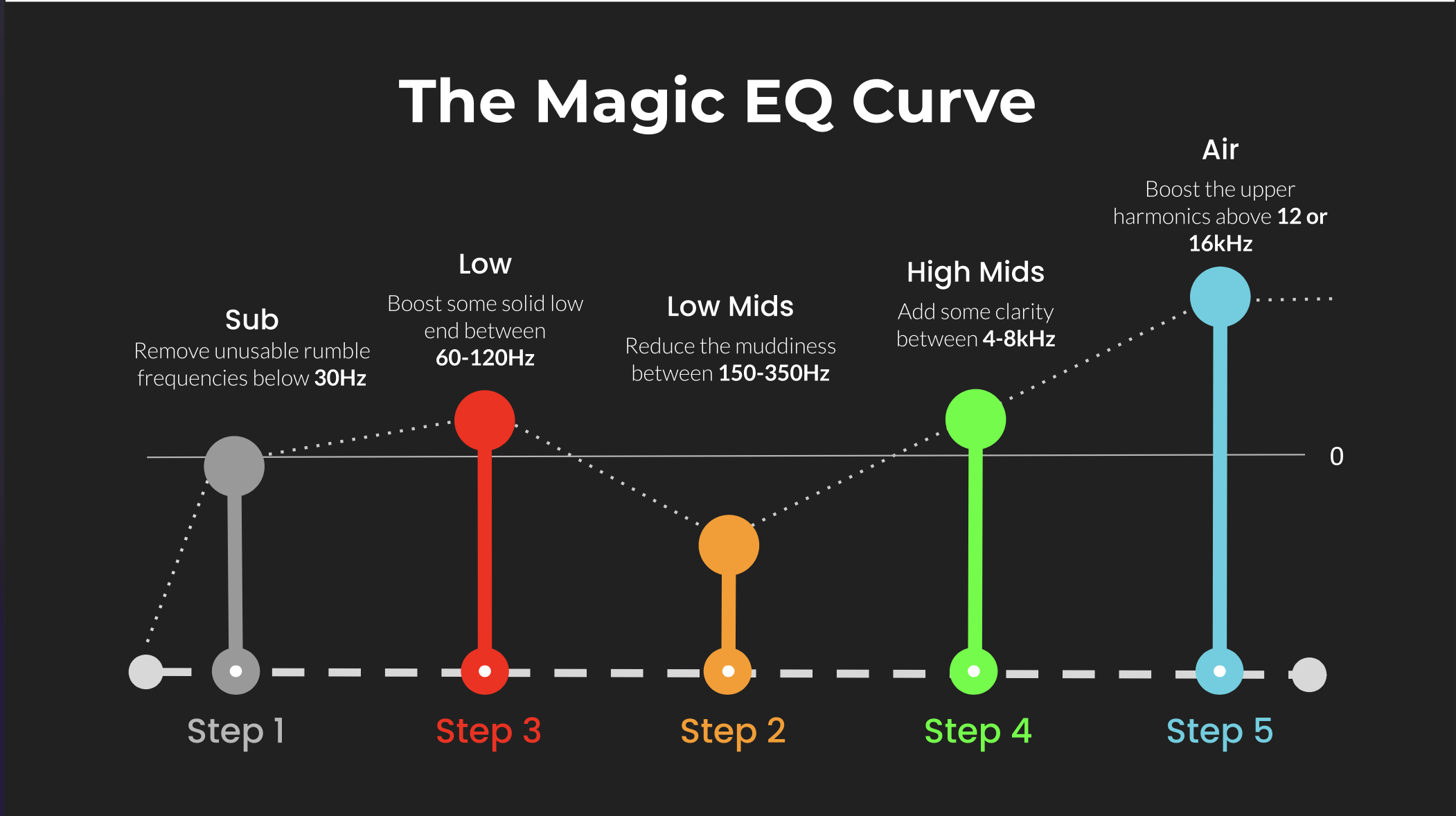 ⭐️ Download my Free Magic EQ settings Guide ⭐️

⭐️ Download my Free Magic Reverb settings Guide ⭐️
#protools #daw #homestudio #recordingschool #recording #musicproduction
Also read:
How to Start Your Own Online Business Teaching Music

Hey, I'm Futch - Music Production Coach and Ableton Certified Trainer

Learn how to make your first song and beat in Ableton Live with my
FREE 90-minute Ableton Live course
I've been teaching audio engineering and music production for 35 years.⭐️
Check out my new online music production program: Music Production Ninja...