Songwriting: Intervals & Chord Inversions 🎹

The Space Between the Notes
“Music is the space between the notes.”
— Claude Debussy
Most beginner songwriters focus on the notes.
The professionals focus on the relationships between the notes.
Two of the most powerful tools in songwriting are:
- Intervals
- Chord Inversions
These concepts are hiding inside almost every great melody and chord progression you've ever heard.
The good news?
They're much simpler than they sound.
Quick Summary
👉 Intervals describe the distance between two notes. Chord inversions change which note is in the bass of a chord. Together, they help songwriters create emotion, movement, tension, and smooth musical transitions.
Song Structure vs Song Form: What's the Difference? 🎵
🎯 What Is an Interval?
An interval is simply:
The distance between two notes.
That's it.
If you play:
C → D
That's an interval.
If you play:
C → G
That's an interval too.
Intervals are the building blocks of:
- Melodies
- Chords
- Harmony
The Staircase Analogy
Imagine a staircase.
Each musical note is a different step.
An interval tells you how many steps you're moving.
Some jumps are small.
Some jumps are large.
Each one creates a different emotional feeling.
Music Systems: The Sections of an Orchestra 🎼
🎵 Common Intervals
Minor 2nd
Very small movement.
Sounds:
- Tense
- Uncomfortable
- Suspenseful
Think:
Movie soundtracks and horror music.
Major 2nd
A whole step.
Sounds:
- Open
- Simple
- Familiar
Common in melodies everywhere.
Minor 3rd
One of the most emotional intervals.
Often associated with:
- Sadness
- Melancholy
- Reflection
Major 3rd
Often sounds:
- Bright
- Happy
- Optimistic
One of the defining sounds of major chords.
Perfect 4th
Stable and strong.
Common in:
- Rock
- Folk
- Classical music
Perfect 5th
Perhaps the most powerful interval.
Think:
- Power chords
- Epic movie scores
- Guitar riffs
Octave
The same note at a higher pitch.
Feels:
- Complete
- Stable
- Familiar
Intervals are emotional shortcuts.
🎤 Why Songwriters Should Care About Intervals
Many iconic melodies are built around memorable intervals.
Somewhere Over The Rainbow
The melody begins with a huge octave leap.
That's why it feels so dramatic and hopeful.
Jaws
Built around a minor second.
That's why it feels tense and threatening.
Smoke on the Water
Built around simple interval movement.
That's why it's so memorable.
The notes matter.
But the intervals create the emotion.
🎹 What Is a Chord Inversion?
Now let's move from melodies to chords.
A chord inversion happens when:
A note other than the root becomes the lowest note.
Root Position
Let's use a C Major chord.
Notes:
C
E
G
The lowest note is C.
This is called:
Root Position
🔄 First Inversion
Now let's move the C up an octave.
Notes:
E
G
C
The chord is still C Major.
But E is now the lowest note.
This is called:
First Inversion
🔄 Second Inversion
Move E up an octave.
Notes:
G
C
E
Now G becomes the lowest note.
This is:
Second Inversion
The chord hasn't changed.
But the feeling has.
Inversions change the perspective without changing the chord.
🎬 The Camera Angle Analogy
Think about filming a scene.
The actor stays the same.
But you change the camera angle.
Suddenly the emotion changes.
Chord inversions work the same way.
The chord remains the same.
The viewpoint changes.
Circle of Fifths vs. Camelot Wheel - What's the Difference?
 ⭐️ Download my Free Music Production Guides or take my free Ableton Live Course ⭐️
🎵 Why Inversions Matter
Without inversions:
C
F
G
C
can sound jumpy.
With inversions:
C
C/E
G/B
C
the bass moves more smoothly.
Everything feels connected.
Songwriters use inversions to create:
- Flow
- Motion
- Tension
- Elegance
🎹 The Hidden Secret of Piano Players
Many beginner pianists play:
Root Position
Root Position
Root Position
Root Position
Everything jumps around.
Professional players often use inversions.
The result:
- Less movement
- Smoother transitions
- Richer harmony
Good inversions make chords feel like they're holding hands.
7 Popular Music Theory Concepts Explained - What do These Musical Terms Mean?
🎧 Why Producers Should Care
Even if you don't play piano...
Your DAW does.
Most MIDI editors allow you to:
- Move notes
- Change voicings
- Create inversions
Without ever touching a keyboard.
A simple chord progression can feel:
- Amateur
- Professional
- Emotional
- Cinematic
Just by changing the inversions.
🎼 Intervals + Inversions = Musical Emotion
This is where things get powerful.
Intervals shape melodies.
Inversions shape harmony.
Together they control much of the emotional experience of a song.
Think of songwriting like storytelling.
Intervals create the dialogue.
Inversions create the scenery.
You need both.
🎵 Famous Examples
The Beatles
Used inversions constantly to create smooth harmonic movement.
Elton John
Masterful use of piano inversions.
Coldplay
Many of their emotional piano parts rely heavily on inversions.
Hans Zimmer
Uses interval relationships and inversions to create massive cinematic emotion.
Hans Zimmer uses 3 chords in Interstellar
🎛️ A Simple Exercise
Try this:
Create a four-chord progression.
For example:
C
G
Am
F
First:
Play everything in root position.
Then:
Experiment with inversions.
Listen for:
- Smoother bass movement
- Better flow
- New emotions
You may be surprised how different the same progression feels.
🧠 A Simple Memory Trick
Intervals
The distance between notes.
Chord Inversions
Changing the lowest note of a chord.
Intervals change the melody.
Inversions change the perspective.
🧠 FAQ
Q: What is an interval in music?
A: The distance between two notes.
Q: What is a chord inversion?
A: A chord where a note other than the root is the lowest note.
Q: Why do songwriters use inversions?
A: To create smoother chord movement and more interesting harmonies.
Q: Do inversions change the chord?
A: No. The chord remains the same, but the voicing changes.
Q: What's more important: intervals or inversions?
A: Both. Intervals shape melodies while inversions shape harmony.
🔑 Final Thought
Great songwriting isn't just about choosing the right notes.
It's about choosing the right relationships between notes.
Intervals create emotion.
Inversions create movement.
Together they transform simple ideas into memorable songs.
Intervals tell the listener how to feel.
Inversions tell the music how to move.
And once you start hearing them, you'll discover they're everywhere.
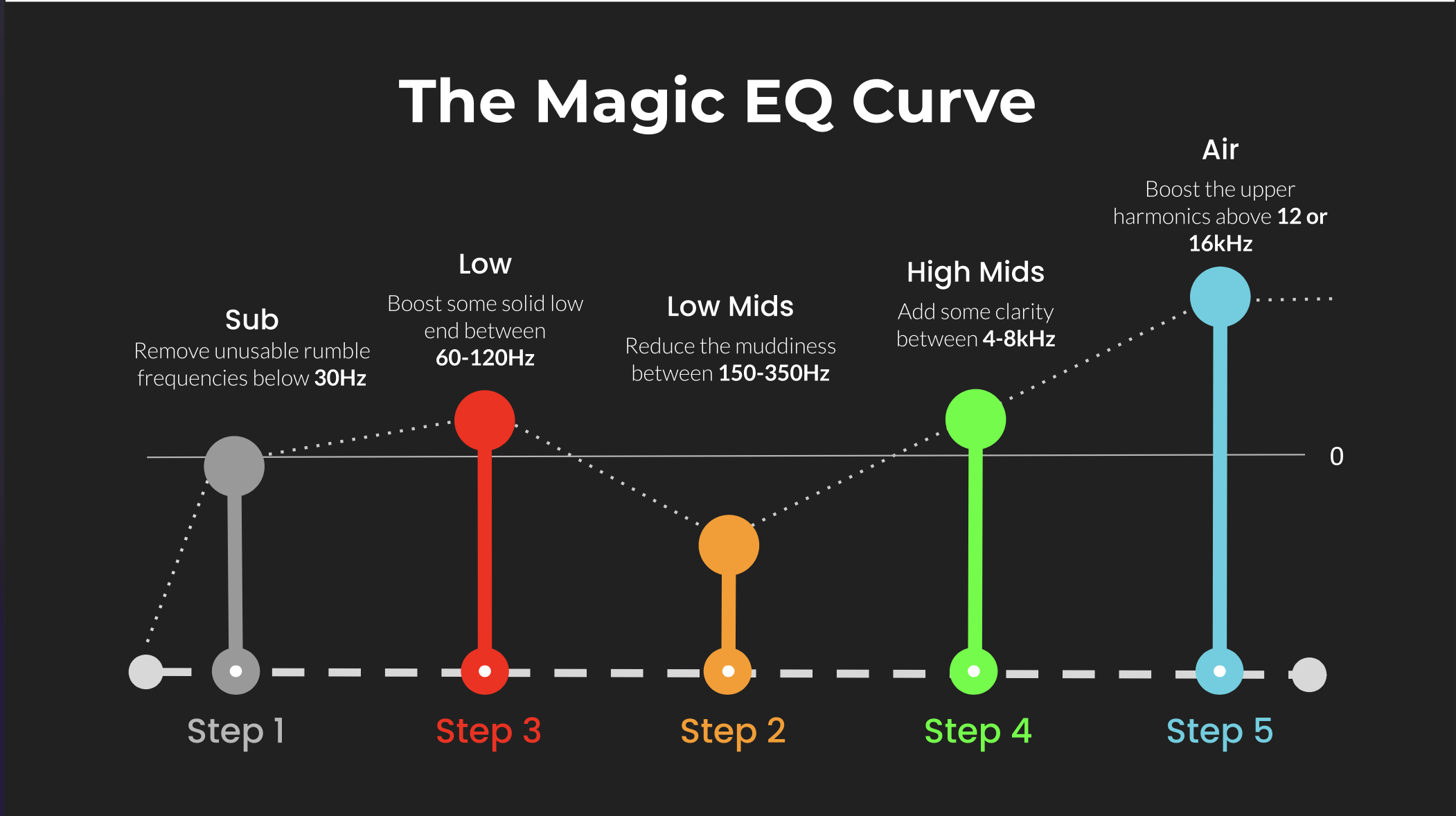 ⭐️ Download my Free Magic EQ settings Guide ⭐️

⭐️ Download my Free Magic Reverb settings Guide ⭐️
#protools #daw #homestudio #recordingschool #recording #musicproduction
Also read:
How to Start Your Own Online Business Teaching Music
Hey, I'm Futch - Music Production Coach and Ableton Certified Trainer

Learn how to make your first song and beat in Ableton Live with my
FREE 90-minute Ableton Live course
I've been teaching audio engineering and music production for 35 years.⭐️
Check out my new online music production program: Music Production Ninja...